The 42 Community Conservancies of Amboseli
Where pastoralist Maasai landowners lead Kenya's largest community-managed conservation rangeland. Safeguarding 275,389 hectares (680,500+ acres) across seven strategic landscape groups, connecting Amboseli National Park, the Chyulu Hills mist forests, Mount Kilimanjaro, and Tsavo West.
The Scale & Ecological Power of Amboseli's Conservancies
Over 90% of Amboseli's wildlife lives outside state-protected park boundaries on community land. Through legally binding conservation easements and voluntary title deed consolidation, pastoralist families generate sustainable livelihoods while keeping ancient migration routes open.
Wildlife Lives Outside State Park Boundaries
Core Amboseli National Park protects only 39,200 hectares (12.5% of the range). The remaining 87.5% — 275,389 hectares across 42 conservancies — is held under voluntary title deed consolidation by indigenous Maasai pastoralists, creating an open, contiguous ecosystem.
Pastoralist Beneficiaries
Direct democratic shareholding, seasonal grass banking, and equitable dividends distributed to 33,000+ titleholder families.
Pioneering Precedent
From Kimana Sanctuary — the first in East Africa (1992) — to 42 statutory community conservancies safeguarding Amboseli.
Premier Ecotourism Partners
Private concessions (Angama, Elewana, Great Plains, Campi ya Kanzi) delivering long-term commercial lease royalties.
Documented Economic Yield
Guaranteed tourism lease payments, 744 ranger salaries, secondary school bursaries, and predator compensation funds.
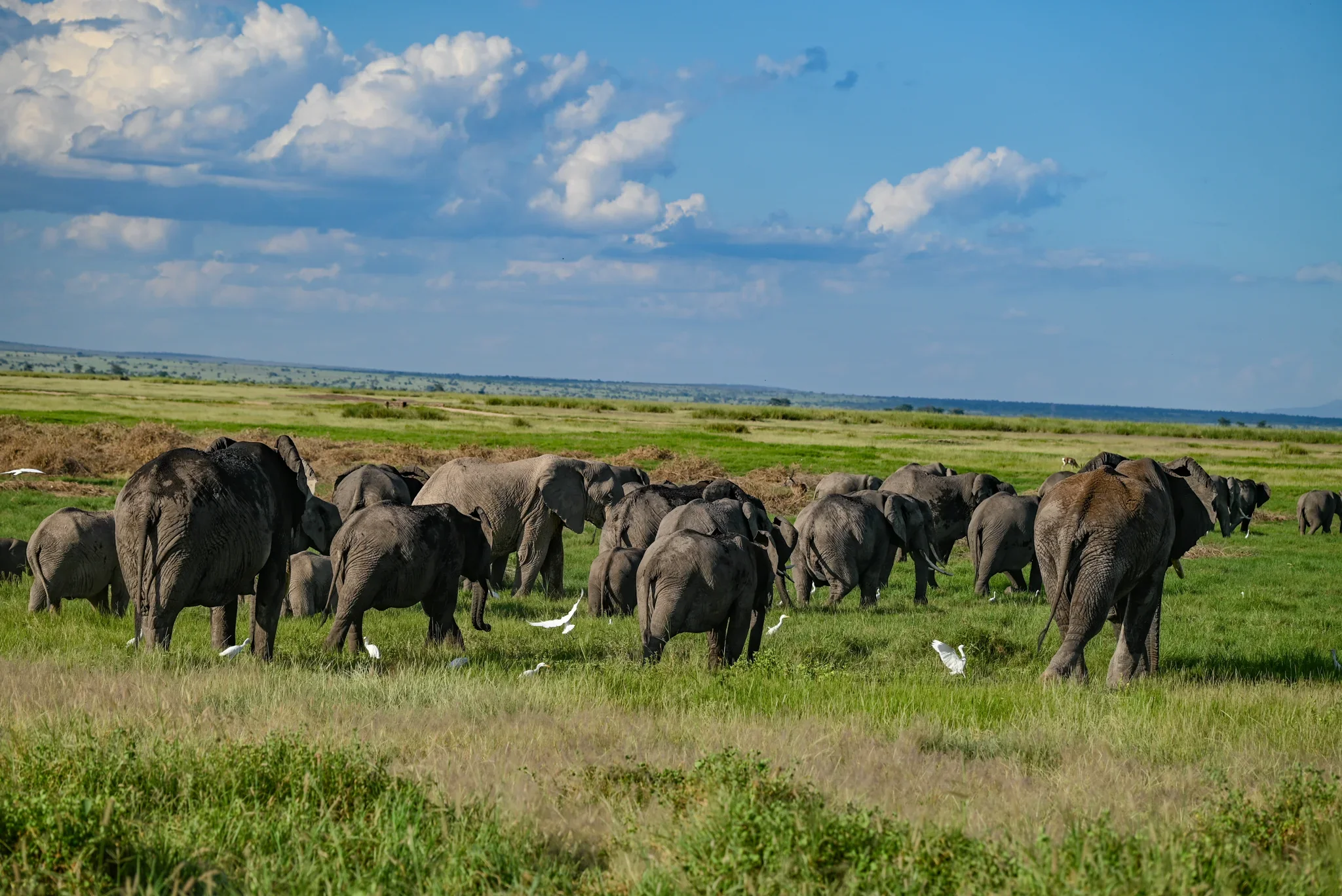 CORRIDOR RECOVERY
Kimana & Kitenden Bottlenecks
Over 2,000 Amboseli elephants, including iconic Super Tuskers, safely navigate these narrow secured pinpoints between Amboseli, Chyulu Hills, and Tsavo West without encountering impassable fences.
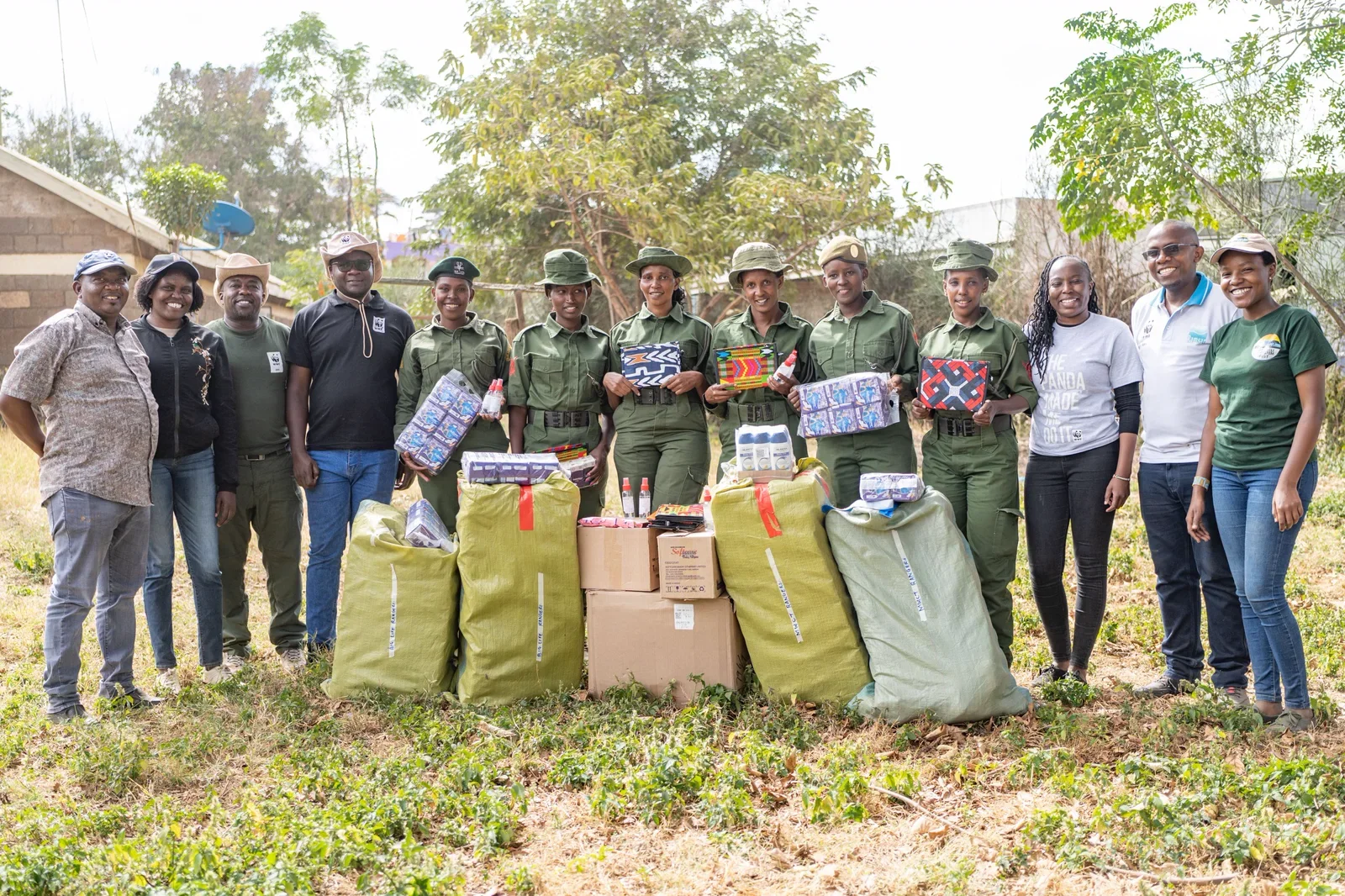 PREDATOR TOLERANCE
Maasai Predator Compensation
Community-governed funds compensate herders for livestock lost to predators across Imbirikani and Kuku. Retaliatory lion poisonings have dropped to virtually zero across 127,900+ hectares.
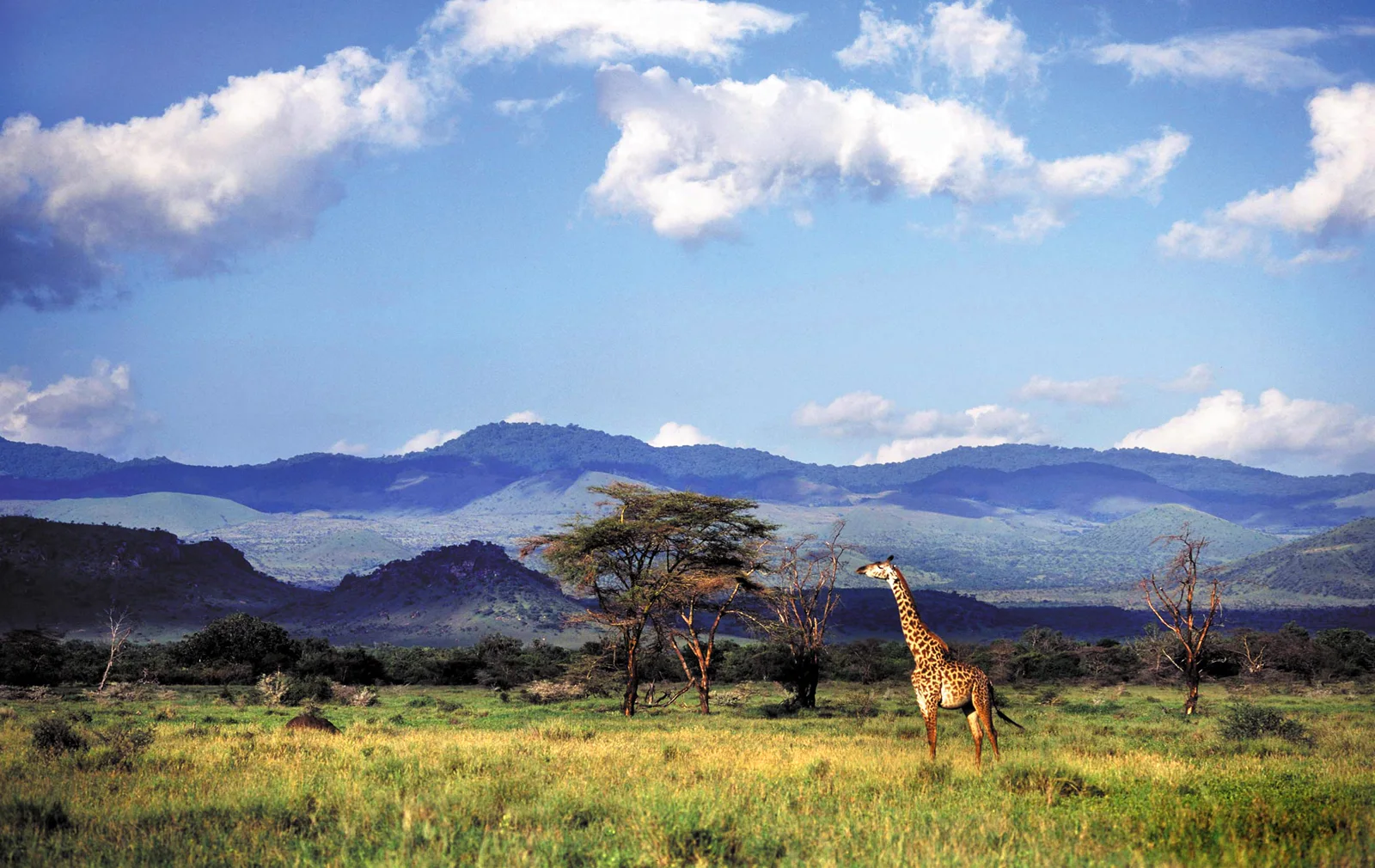 VOLCANIC WATER TOWERS
Chyulu REDD+ & Cloud Forests
High-altitude cloud forests capture atmospheric mist to recharge subterranean volcanic aquifers feeding Mzima Springs, the Tsavo River, and perennial fresh water reaching coastal Mombasa.
The 7 Conservancy Landscape Groups
Explore the seven regional group alliances safeguarding 275,389 hectares across the Greater Amboseli Ecosystem. Click any landscape card below to open its dedicated profile and view all member conservancies.
Kimana Conservancies
Securing the vital wildlife bottleneck connecting Amboseli to Chyulu Hills & Tsavo West.
Olgulului Conservancies
Surrounding Amboseli National Park to provide immediate seasonal grazing range and transboundary Kilimanjaro routes.
Imbirikani Conservancies
Contiguous with Chyulu Hills National Park, maintaining world-renowned predator compensation corridors.
Kuku Conservancies
Protecting the western Chyulu slopes, fresh water spring sources, and high-altitude rangeland sanctuaries.
Eselengei Conservancies
Northern dispersal sector safeguarding critical wildlife corridors extending toward northern plains.
Rombo & Nasaru Olosho
Southern transboundary Tanzanian frontier alongside broader institutional rangeland alliances.
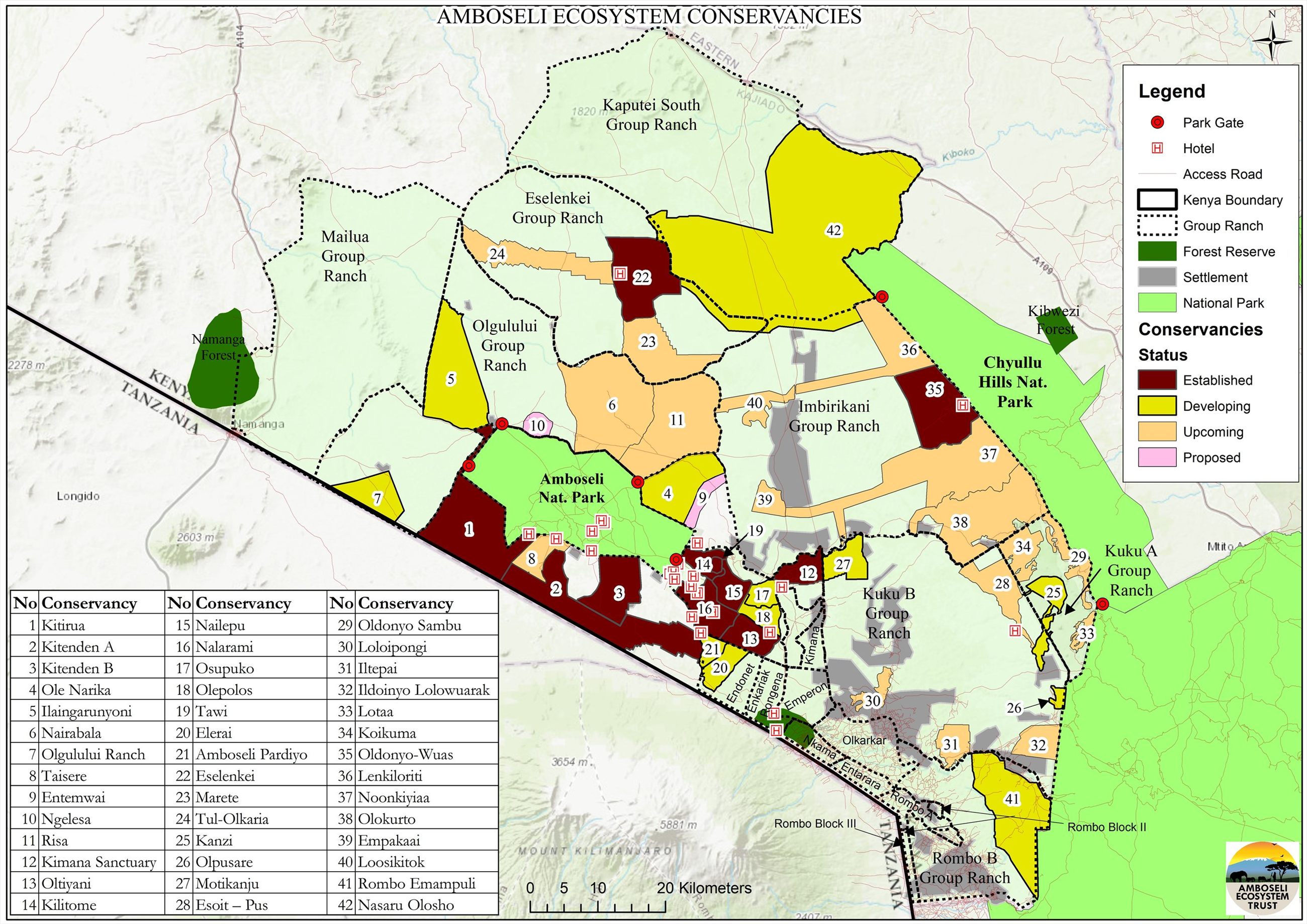
Spatial Map of the 42 Amboseli Conservancies
Official spatial zoning, parcel consolidation boundaries, and wildlife migration corridors uniting 680,500+ acres across 7 community groups. Released 15 October 2026.
Life & Stewardship Across the Conservancies
From community rangers patrolling ancient trails to elders in council and women leading indigenous grass seedbanks, see how community leadership sustains the Amboseli landscape.
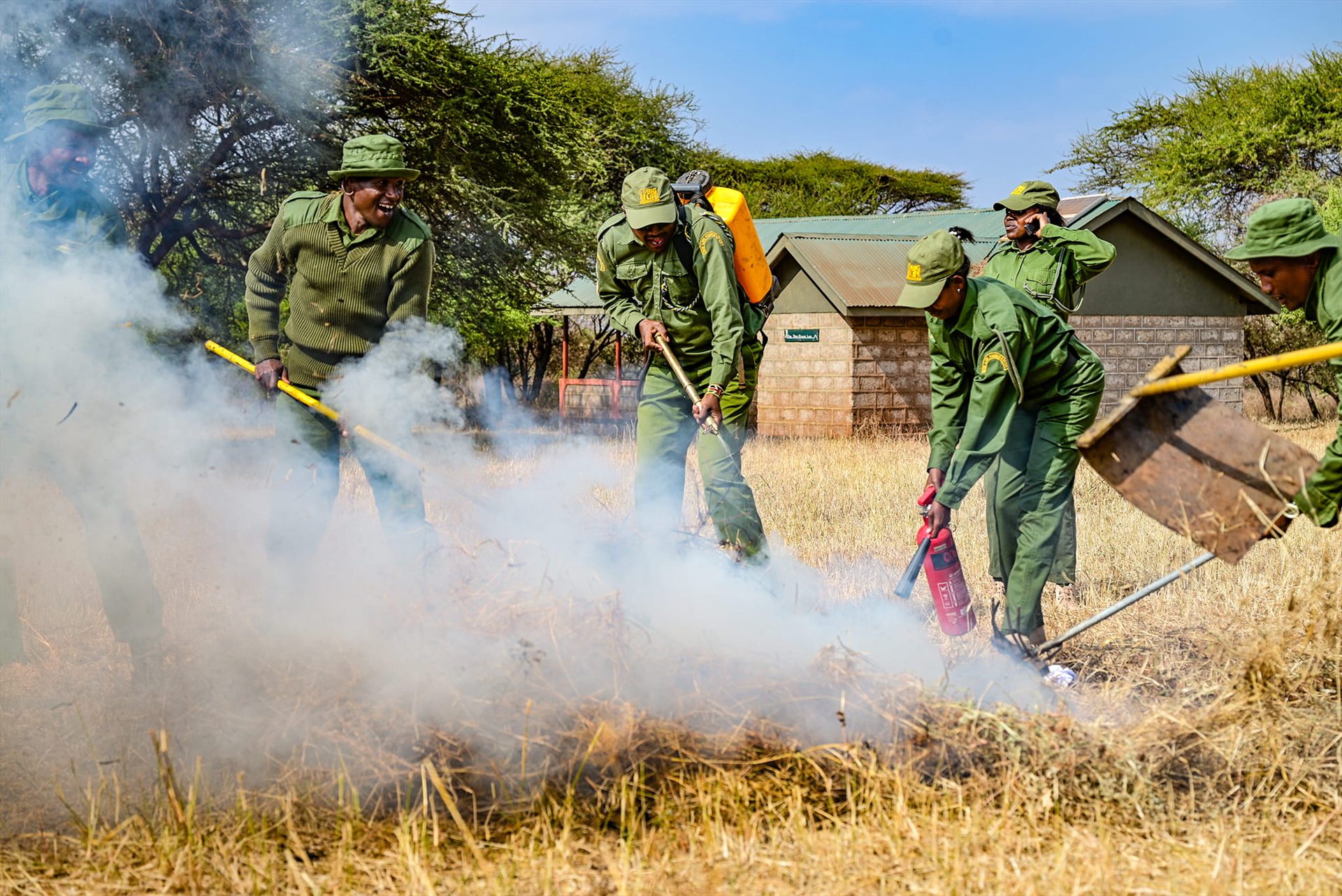
744 Community Wildlife Scouts & Rangers
Trained community rangers recruited directly from landowner families conduct 24/7 patrols across the 42 conservancies.
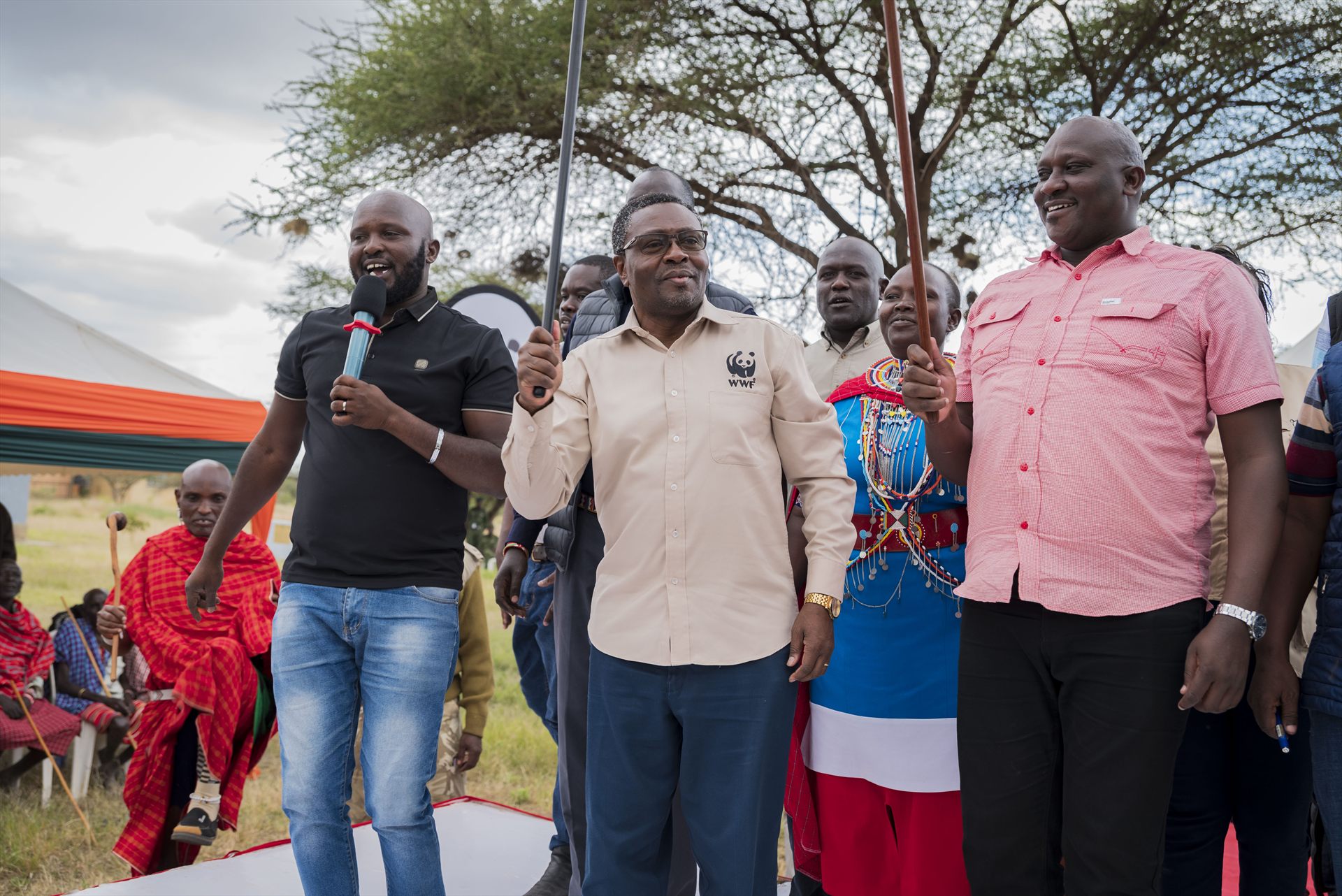
Elders & Conservancy Leadership
Grassroots governing committees ensuring pastoralist land rights and equitable dividend sharing.
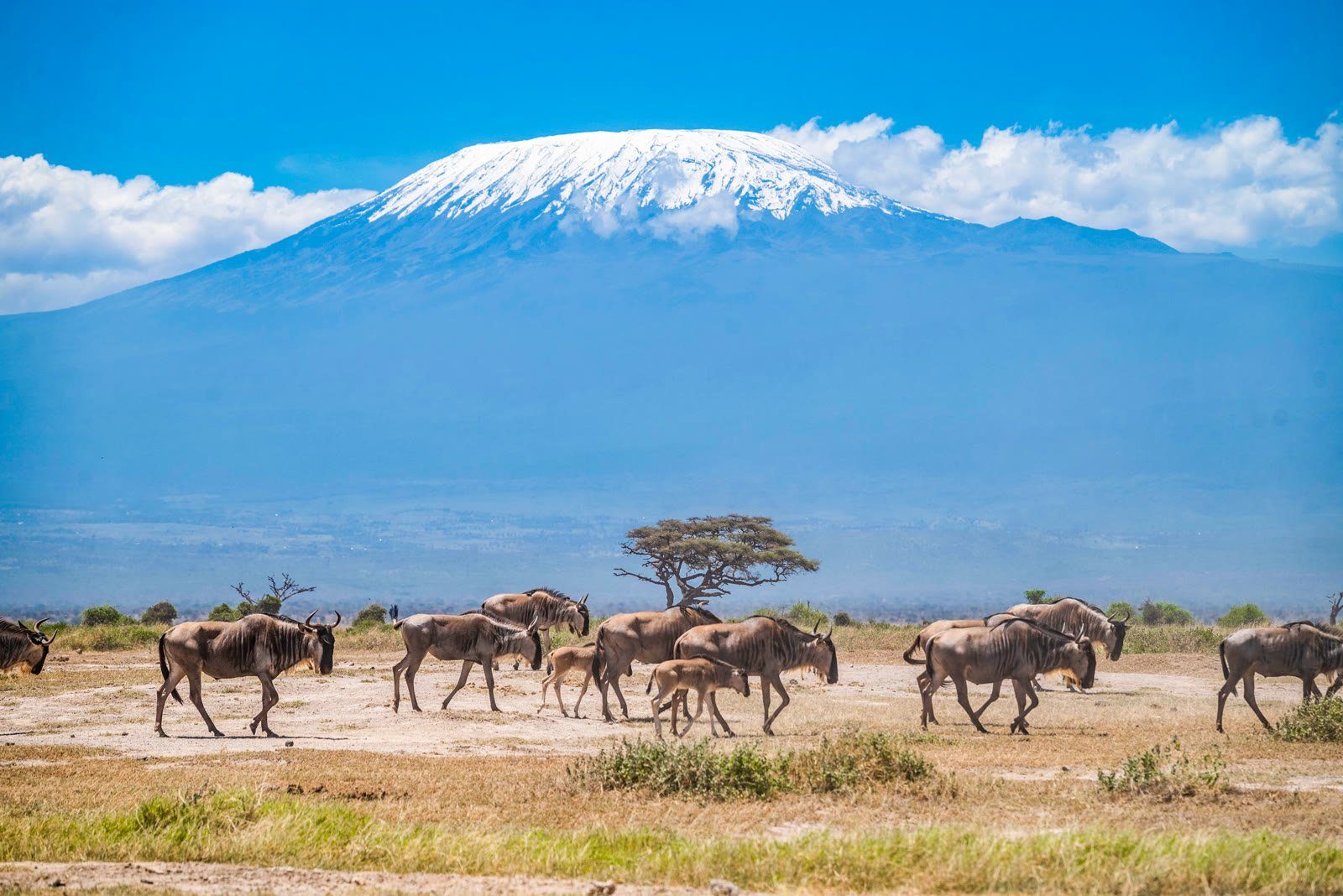
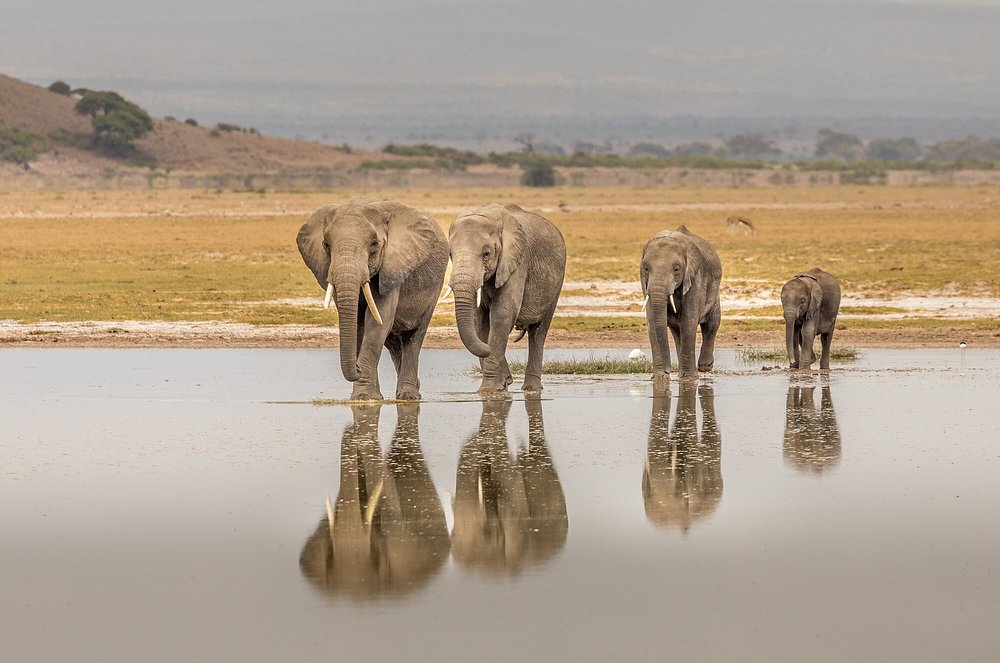
Free-Roaming Elephant Herds
Over 2,000 elephants navigate between Amboseli, Chyulu, and Tsavo along conserved corridors.
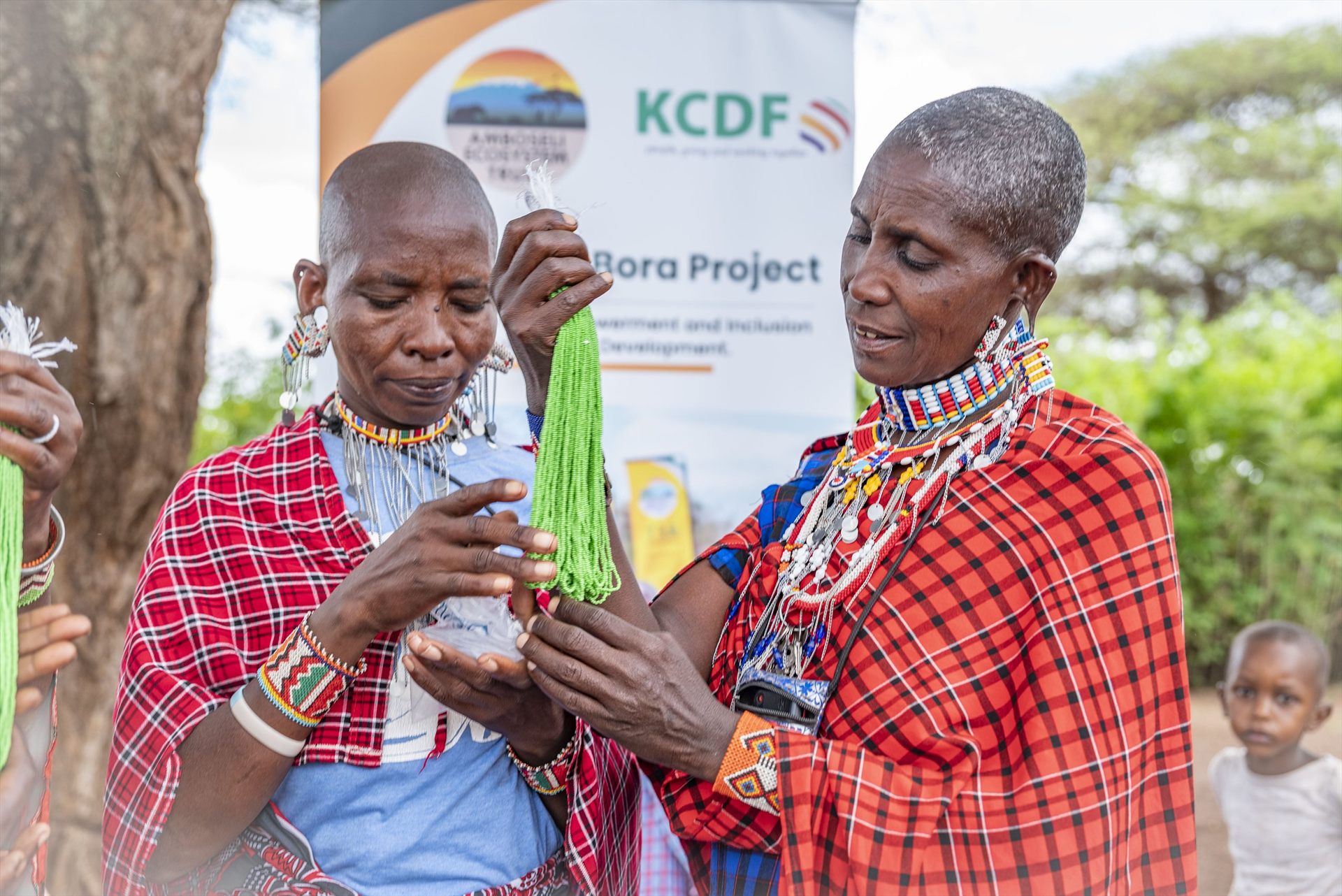
Women Indigenous Grass Seedbanks
Empowering women pastoralists through rangeland reseeding, climate resilience, and seed commercialization.
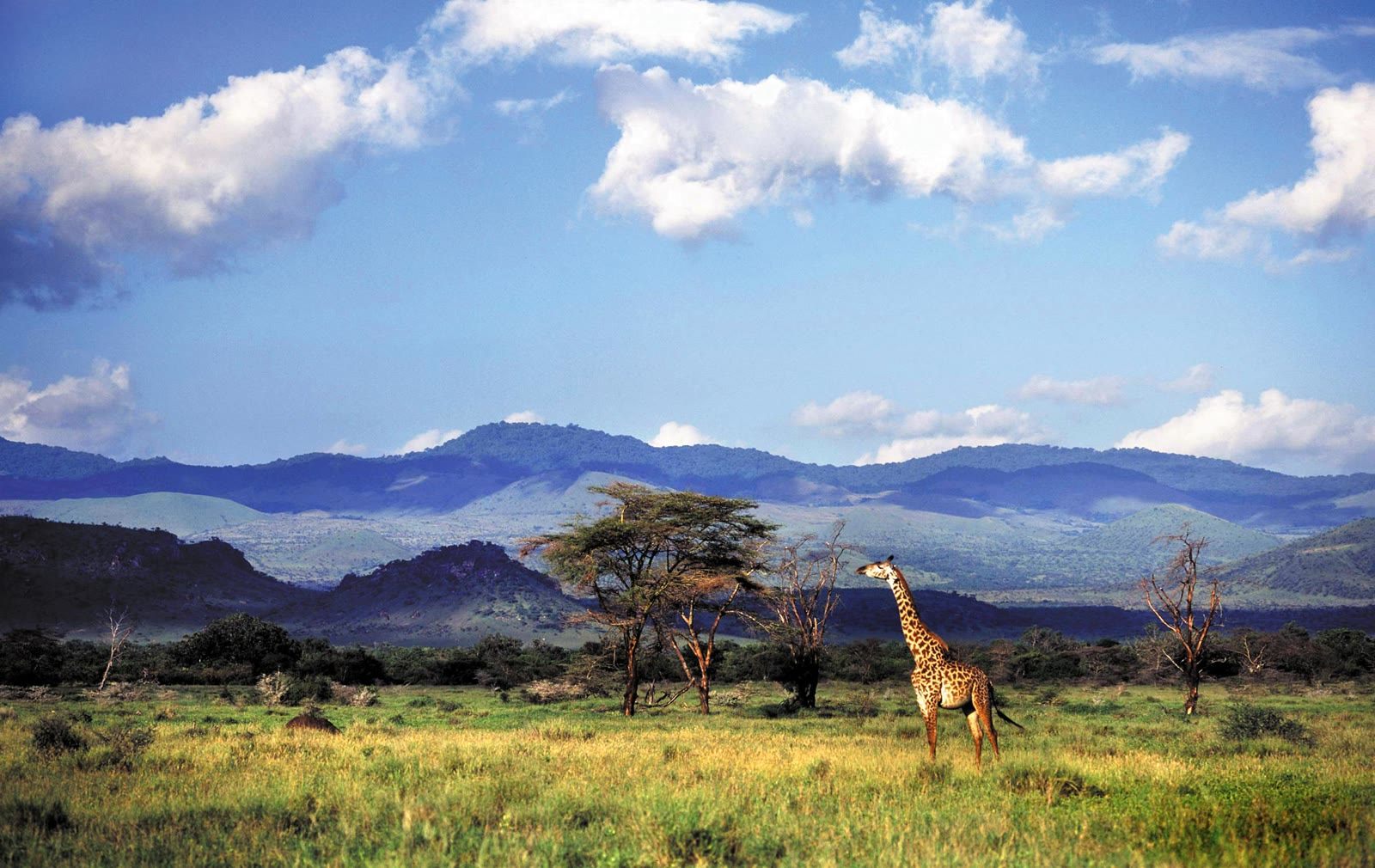
Chyulu Cloud Forests & Catchments
Protecting volcanic headwaters and REDD+ carbon credit ecosystems in Kuku and Imbirikani.
Selenkay & Porini Amboseli
Kenya's very first community-based wildlife conservancy (est. 1997) maintaining strict photographic conservation zoning.
Sustainable Ecotourism & Investment Opportunities
AET's Conservancy Investment Prospectus connects ethical investors and safari operators with vetted community conservancies seeking low-impact ecotourism concessions, carbon offset partnerships, and rangeland restoration ventures.
Guaranteed direct household dividends, transparent lease auditing, and democratic conservancy board approvals.
Mandatory local hiring quotas prioritizing community rangers, scouts, trackers, and lodge hospitality staff from member families.
Strict statutory alignment with the Amboseli Ecosystem Management Plan (AEMP) and Wildlife Conservation Act 2013.
Support Community Landowners Safeguarding the Savanna
Every hectare secured in a community conservancy protects vital elephant migration paths, preserves ancient grazing commons, and provides direct dividends to Maasai pastoralist families.